
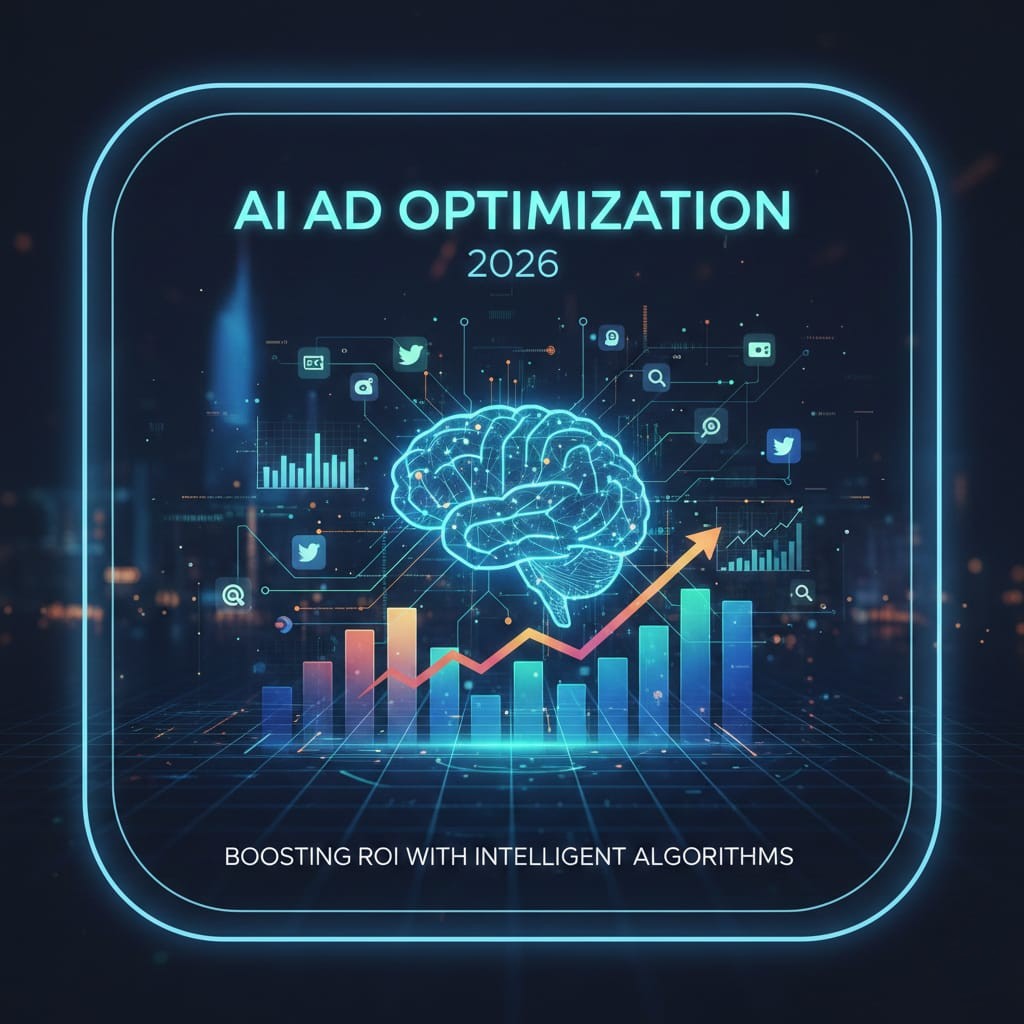
AI-Assisted Ad Optimization in 2026: A Complete Guide for Modern Marketers
Digital advertising has evolved dramatically over the past decade, but 2026 marks a turning point where AI-assisted ad optimization has become not just an advantage, but a necessity. As advertising costs continue to rise and consumer attention becomes increasingly fragmented, businesses of all sizes are turning to artificial intelligence to maximize their advertising ROI. This comprehensive guide explores how AI in digital advertising is reshaping the marketing landscape and what you need to know to stay competitive.
What Is AI-Assisted Ad Optimization?
AI-assisted ad optimization refers to the use of artificial intelligence and machine learning algorithms to automate and improve advertising campaign performance. Unlike traditional manual methods that rely on human analysis and adjustment, AI systems continuously analyze vast amounts of data to make real-time decisions about ad placement, targeting, bidding, and creative elements.
In 2026, these systems have matured significantly. They now process billions of data points across multiple channels, learning from user behavior patterns, seasonal trends, and competitive dynamics to optimize campaigns with unprecedented precision.
Why AI-Assisted Ad Optimization Matters in 2026
The digital advertising ecosystem has grown increasingly complex. Consumers interact with brands across dozens of touchpoints, privacy regulations have tightened data access, and the cost of customer acquisition continues to climb. Manual optimization simply cannot keep pace with these challenges.
Machine learning in ads addresses these issues by:
- Processing data at a scale impossible for human teams
- Identifying patterns and opportunities humans might miss
- Making millisecond decisions during ad auctions
- Adapting to market changes in real-time
- Reducing the time marketers spend on repetitive tasks
For business owners and marketers, this translates to better performance with less manual effort, allowing teams to focus on strategy rather than tactical adjustments.
How AI Works in Modern Ad Platforms
Automated Bidding
AI algorithms analyze historical performance data, competitor activity, and real-time auction dynamics to determine optimal bid amounts. These systems predict the likelihood of conversion for each impression and adjust bids accordingly, ensuring you pay the right price for valuable clicks while avoiding overspending on low-quality traffic.
In 2026, automated bidding has become sophisticated enough to account for factors like weather patterns, economic indicators, and even social media sentiment that might influence consumer behavior.
Intelligent Targeting
Automated ad optimization leverages AI to identify and reach your ideal customers. Rather than relying solely on demographic data, modern systems analyze behavioral signals, intent indicators, and lookalike patterns to find users most likely to convert.
These algorithms continuously refine audience segments based on performance data, automatically excluding underperforming groups and doubling down on high-value prospects.
Dynamic Budget Allocation
AI systems monitor performance across campaigns, ad sets, and individual ads, automatically shifting budget toward the best performers. This dynamic reallocation happens continuously, ensuring your spend flows to the highest-ROI opportunities without requiring constant manual intervention.
Creative Optimization
Perhaps the most impressive advancement in AI-assisted ad optimization is creative testing and optimization. AI analyzes which headlines, images, calls-to-action, and ad formats resonate with different audience segments, then automatically assembles and serves the most effective combinations.
Some platforms now generate creative variations on the fly, testing hundreds of combinations to find winning formulas that human teams would need months to discover through traditional A/B testing.
AI Optimization vs Manual Optimization: A Comparison
| Aspect | AI-Assisted Optimization | Manual Optimization |
|---|---|---|
| Speed | Real-time adjustments across thousands of variables | Hours or days to implement changes |
| Scale | Manages unlimited campaigns simultaneously | Limited by team capacity |
| Data Processing | Analyzes millions of data points instantly | Relies on sampled data and human interpretation |
| Pattern Recognition | Identifies complex, non-obvious correlations | Limited to patterns humans can conceptualize |
| Consistency | Performs identically 24/7 without fatigue | Subject to human error and inconsistency |
| Strategic Thinking | Limited to programmed parameters | Excels at creative strategy and brand positioning |
| Adaptation | Learns and improves continuously | Requires training and knowledge transfer |
| Cost | Platform fees, potential setup costs | Staff time and expertise |
Benefits of AI-Assisted Ad Optimization
Improved ROI and Efficiency
The primary benefit is financial. Businesses using AI in digital advertising typically see 20-40% improvements in cost-per-acquisition compared to manual methods, though results vary by industry and implementation quality.
Time Savings
Marketing teams report saving 10-15 hours weekly on campaign management tasks, freeing time for strategic initiatives like customer research, content creation, and partnership development.
Reduced Human Error
Automated systems eliminate common mistakes like forgetting to pause underperforming ads, missing bid adjustments during peak periods, or applying changes to the wrong campaign.
Continuous Learning
Machine learning in ads means your campaigns get smarter over time, accumulating knowledge that improves future performance even as market conditions change.
Limitations and Risks to Consider
Data Dependency
AI systems require substantial data to perform effectively. New campaigns or businesses with limited conversion history may not see immediate benefits and might experience a learning period where performance is suboptimal.
Black Box Problem
Many AI algorithms operate as “black boxes,” making decisions that aren’t fully transparent. This can make troubleshooting difficult and may clash with organizations that require detailed justification for marketing spend.
Over-Optimization Risk
AI can sometimes optimize too aggressively for short-term metrics at the expense of long-term brand building or customer lifetime value. Without proper constraints, systems might chase easy conversions while ignoring more valuable but harder-to-convert prospects.
Platform Dependency
Relying heavily on platform-specific AI tools creates dependency that can be problematic if you need to migrate to different advertising channels or if platform algorithms change unexpectedly.
Common Myths About AI-Assisted Ad Optimization
Myth 1: AI Will Completely Replace Human Marketers
Reality: AI excels at optimization but lacks the creative judgment, strategic thinking, and brand understanding that human marketers provide. The most effective approach combines AI automation with human oversight.
Myth 2: AI Guarantees Instant Results
Reality: While automated ad optimization is powerful, AI systems need time to collect data and learn. Expecting immediate transformation leads to disappointment and premature abandonment of effective tools.
Myth 3: More Data Always Means Better Results
Reality: Data quality matters more than quantity. Feeding AI systems inaccurate or irrelevant data produces poor outcomes regardless of volume.
Myth 4: AI Optimization Is Only for Large Enterprises
Reality: Most advertising platforms now offer AI-assisted features to businesses of all sizes. Small businesses can benefit significantly from automation that levels the playing field against larger competitors.
Privacy-First Advertising and First-Party Data
The advertising landscape in 2026 is fundamentally privacy-focused. Third-party cookies are virtually extinct, and regulations like GDPR and emerging privacy laws have reshaped data collection practices.
AI-assisted ad optimization has adapted by prioritizing first-party data—information collected directly from your customers with their consent. This shift has several implications:
- Businesses with strong customer relationships and robust data collection practices have competitive advantages
- AI systems increasingly rely on contextual signals and on-platform behavior rather than cross-site tracking
- Privacy-preserving techniques like federated learning allow AI to learn from aggregated patterns without accessing individual user data
Successful marketers in this environment focus on building direct relationships with customers, encouraging newsletter signups, account creation, and loyalty programs that generate valuable first-party data for AI systems to optimize against.
Best Practices for Using AI-Driven Ads
Start with Clear Objectives
Define specific, measurable goals before enabling AI optimization. Vague objectives like “improve performance” give AI systems insufficient direction, while clear targets like “reduce cost per acquisition by 25%” provide actionable parameters.
Provide Sufficient Learning Data
Allow AI systems adequate time and conversion volume to learn effectively. Most platforms recommend at least 50 conversions before algorithms stabilize, though some newer systems perform better with less data.
Set Appropriate Guardrails
Establish budget caps, bid limits, and placement exclusions to prevent AI from making decisions outside acceptable parameters. These constraints prevent costly mistakes during the learning phase.
Monitor Performance Regularly
While AI handles optimization, human oversight remains essential. Review performance weekly to catch anomalies, identify opportunities for strategic shifts, and ensure AI decisions align with broader business objectives.
Test and Iterate
Don’t assume AI will find the perfect solution immediately. Test different campaign structures, audience definitions, and creative approaches to give AI systems better raw material to optimize.
Combine AI Tools Strategically
Use automated bidding, audience targeting, and creative optimization together rather than in isolation. These features are designed to work synergistically, each enhancing the others’ effectiveness.
Future Trends in AI-Assisted Ad Optimization (2026 and Beyond)
Multimodal AI Integration
The next generation of ad optimization will seamlessly blend text, image, video, and audio analysis, creating truly integrated campaigns that adapt creative elements across formats based on performance data.
Predictive Budget Planning
AI systems are beginning to forecast campaign performance weeks or months in advance, helping businesses plan budgets more accurately and anticipate seasonal fluctuations with greater precision.
Cross-Channel Orchestration
Future AI tools will optimize not just within individual platforms but across the entire marketing mix, intelligently allocating budget between search, social, display, and emerging channels based on unified performance metrics.
Ethical AI and Transparency
Growing demand for explainable AI will push platforms to make their algorithms more transparent, giving marketers better insight into optimization decisions and enabling more informed strategic choices.
AI-Generated Creative at Scale
Generative AI will move beyond simple text variations to create entirely new visual concepts, video content, and interactive ad formats, dramatically expanding creative testing capabilities.
Conclusion
AI-assisted ad optimization has transitioned from experimental technology to essential infrastructure for digital marketing in 2026. The combination of automated bidding, intelligent targeting, dynamic budget allocation, and creative optimization delivers measurable improvements in campaign performance while freeing marketers to focus on strategic initiatives.
However, success requires more than simply enabling automation features. The most effective approach combines AI’s computational power with human creativity, strategic thinking, and business judgment. Start with clear objectives, provide quality data, establish appropriate guardrails, and maintain active oversight of automated systems.
As machine learning in ads continues to evolve, the competitive advantage will belong to organizations that embrace these tools thoughtfully—leveraging automation where it excels while preserving the irreplaceable human elements of marketing. Whether you’re a small business owner managing your first campaign or an experienced marketer overseeing complex multi-channel initiatives, understanding and implementing AI-assisted ad optimization is no longer optional—it’s fundamental to staying competitive in the future of digital advertising.
Recommended Images with Alt Text, Captions, and Descriptions
To enhance this article’s visual appeal and SEO performance, consider adding images at the following sections:
Hero Image (Top of Article)
- Description: A modern, clean dashboard interface displaying multiple analytics screens with graphs, charts, and performance metrics. Include elements like rising trend lines, AI/machine learning icons, and digital advertising symbols. Use a professional color scheme with blues, purples, or teals. The image should convey technology, data analysis, and optimization without showing any specific platform branding.
- Alt text: “Digital dashboard showing AI-assisted ad optimization metrics and performance graphs for 2026 campaigns”
- Caption: AI-powered advertising platforms analyze millions of data points to optimize campaign performance in real-time.
Section: How AI Works in Modern Ad Platforms
- Description: An infographic-style diagram showing the flow of AI decision-making in advertising. Include visual representations of: data streams flowing into a central AI processor, branching paths showing bidding/targeting/budget/creative optimization, and outputs leading to improved campaign results. Use icons, arrows, and simple illustrations. Keep it conceptual rather than technical, with a clean, modern design.
- Alt text: “Diagram illustrating AI algorithms analyzing data for automated bidding and targeting in digital advertising”
- Caption: Modern AI systems process bidding, targeting, budget allocation, and creative optimization simultaneously across campaigns.
Section: AI Optimization vs Manual Optimization Table
- Description: A split-screen or side-by-side comparison visual. Left side: robotic/AI elements (circuit patterns, neural network graphics, automated symbols) with speed and efficiency indicators. Right side: human elements (person at computer, manual controls, strategic thinking symbols). Use contrasting but complementary colors. The image should highlight the differences while showing both have value.
- Alt text: “Comparison table showing differences between AI-assisted and manual ad optimization methods”
- Caption: AI optimization excels at scale and speed, while manual optimization provides strategic thinking and creative direction.
Section: Benefits of AI-Assisted Ad Optimization
- Description: An upward-trending infographic showing key benefits as visual elements. Include icons or illustrations representing: money/ROI (growing stack of coins or upward arrow with dollar sign), time savings (clock or calendar), reduced errors (checkmarks or shield), and continuous learning (brain with circuit patterns or ascending steps). Use a positive, energetic color palette with greens and blues.
- Alt text: “Infographic displaying key benefits of AI in digital advertising including improved ROI and time savings”
- Caption: Businesses using AI-assisted ad optimization typically see 20-40% improvements in cost-per-acquisition compared to manual methods.
Section: Privacy-First Advertising and First-Party Data
- Description: A conceptual illustration showing data protection and privacy. Include elements like: a shield or lock symbol, user consent checkboxes, first-party data flowing directly between customer and business (avoid third-party intermediaries), and privacy-friendly technology symbols. Use trustworthy colors like blues and greens. The image should feel secure and transparent, not surveillance-oriented.
- Alt text: “Conceptual illustration of privacy-focused advertising with first-party data collection and consent mechanisms”
- Caption: The shift to privacy-first advertising has made first-party data and customer consent central to effective AI optimization.
Section: Best Practices for Using AI-Driven Ads
- Description: A visual checklist or step-by-step guide layout. Show 5-6 key best practices as illustrated icons or graphics: target/bullseye (clear objectives), data chart (sufficient data), guardrails or boundaries, monitoring dashboard, A/B testing symbols, and interconnected tools. Design should be practical and actionable, using numbered steps or checkbox formatting. Professional but approachable style.
- Alt text: “Checklist graphic showing best practices for implementing AI-driven advertising campaigns”
- Caption: Successful AI-assisted advertising requires clear objectives, sufficient data, and regular human oversight to maximize results.
Section: Future Trends in AI-Assisted Ad Optimization
- Description: A forward-looking, futuristic illustration showing emerging technologies. Include elements like: holographic displays, interconnected network nodes (representing cross-channel integration), predictive analytics visualizations, generative AI creating content, and transparent/explainable AI concepts. Use modern, tech-forward colors like electric blue, purple, and silver. The image should feel innovative and optimistic about the future without being overly sci-fi.
- Alt text: “Futuristic visualization of emerging AI trends in digital advertising beyond 2026”
- Caption: Next-generation AI will enable cross-channel orchestration, predictive budget planning, and real-time creative generation at scale.
Implementation Note: All images should be optimized for web use (compressed without quality loss), include descriptive alt text for accessibility compliance, and feature captions that reinforce key article takeaways while incorporating target keywords naturally. Aim for a consistent visual style throughout the article, using illustrations or high-quality stock photography that avoids clichéd “corporate AI” imagery.